Mandela 2013; Tutu 2021.
There are times that gives us all cause to pause and look within

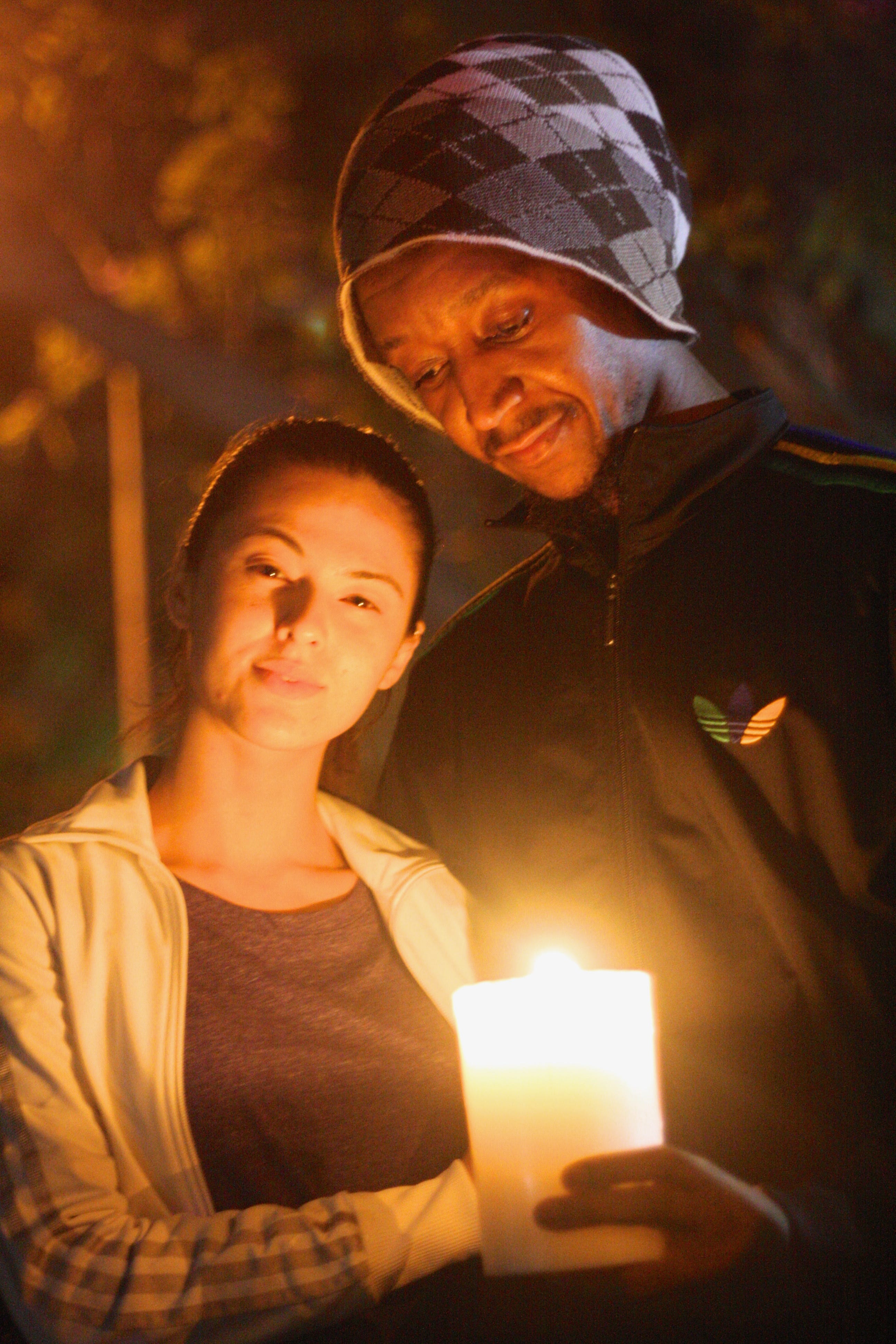
A week of mourning had been announced for Archbishop Desmond Tutu, the social activist and Nobel laureate, who was a key figure in the movement that brought to an end the apartheid in South Africa.
Tutu died in Cape Town on December 26, at 90. After he received a prostate cancer diagnosis in the late 1990s, he had been hospitalised several times, fighting infections associated with his cancer treatment.
As the first black bishop of Johannesburg and later Anglican Archbishop of Cape Town, Tutu worked through his positions, his community and his organisations — always non-violently — to rid South Africa of apartheid.
Charismatic at the pulpit, able to organise a protest and then energise it seemingly at will, Tutu was a man who used sharp wit and charm to get across messages that, coming from someone else, delivered differently, might seem confrontational, provocative and even disruptive.
In 1984 when he received the Nobel Peace Prize, it confirmed his stature — not the short, stocky physical bit — on the world stage, not that any such validation was asked for or needed by those he fought for.
In the hours following his passing, Tutu has been remembered in different ways.
Cyril Ramaphosa, South Africa's president, said that Tutu had helped "liberate South Africa."
Joe Biden, president of the United States of America, said Tutu's legacy "transcends borders and will echo through the ages."
Barack Obama referred to Tutu as "a mentor, friend and moral compass."
But these are voices that are heard, day-in and day-out, and will be given a platform to express themselves on all subjects, irrespective of expertise or relevance.
The one that stood out for me, was this from Sumaya Hisham, a photographer of Indian descent who had attended Tutu rallies as a child and went on to document the man in images.
Hisham recalls how the great man was still angry with the African National Congress, who had tried to keep him away from Nelson Mandela's funeral months earlier.
"I will not vote for them," Tutu said of the ANC in Hisham's recounting to News24. "I say it with a very sore heart. We dreamt about a society that really made people feel they mattered. You can't do that in a society where you have people who go to bed hungry, where many of our children still attend classes under trees."
Hisham missed an appointment with Tutu in 2016, dealing with a child ill with appendicitis, and found that there was a gift box sent to the hospital.
But it's the great and good who voiced their Tutu tributes that circulate,
Except, Tutu was a man who spoke for those whose voices would not be heard.
When those of us who were so far removed from the grim, ugly realities of apartheid, and its eventual ending, think about how history, however recent, unfolded, we begin and end with Nelson Mandela.
While he was undoubtedly the face of the movement, standing for moral authority, even a man as great as Mandela could not have achieved what he did on his own.
When Tutu died, in Cape Town, in Covid times, we could only take in the news, sitting in a press box, learn from our South African friends what this meant to them and absorb the significance of the moment.
Eight years earlier, however, On December 5, I had just finished covering a Day/Night One-Day International in which Quinton de Kock hammered 135, taking South Africa to a mammoth 358 for 4, where India were trounced by 141 runs.
After a long day's work, I had settled down to a hard-earned crisp white wine with Neil Manthorp, the veteran South African journalist and broadcaster, when his phone exploded. Beeping and vibrating like there was no tomorrow, he eventually could not ignore it, and the communication came in thick and fast.
Mandela had died, and there were agencies around the world who wanted confirmation, and following that, something or the other from Manners.
We skulled out wine as all televisions in the hotel came alive, and Jacob Zuma made the official announcement.
Three other of my journalist friends from India were in the same hotel, and though it was almost midnight, we instinctively knew we had to go to Houghton, where Madiba breathed his last in Mandela House.
It was not far away, but roads were quickly getting blocked, taxis were hard to come by and yet, we got there.
What unfolded from there on was the most magical of nights.
Having been used to death being marked only by wailing and hysterics, or sombre repression of feelings, it was surreal to witness and be part of, a celebration of life and soul rather than the passing of a body.
Mandela was 95 then, and had been ill, in and out of hospitals, and yet South Africa was unprepared for his passing, in a manner similar to parents never quite being ready for what a first-born brings.
What I remember from that night are the songs.
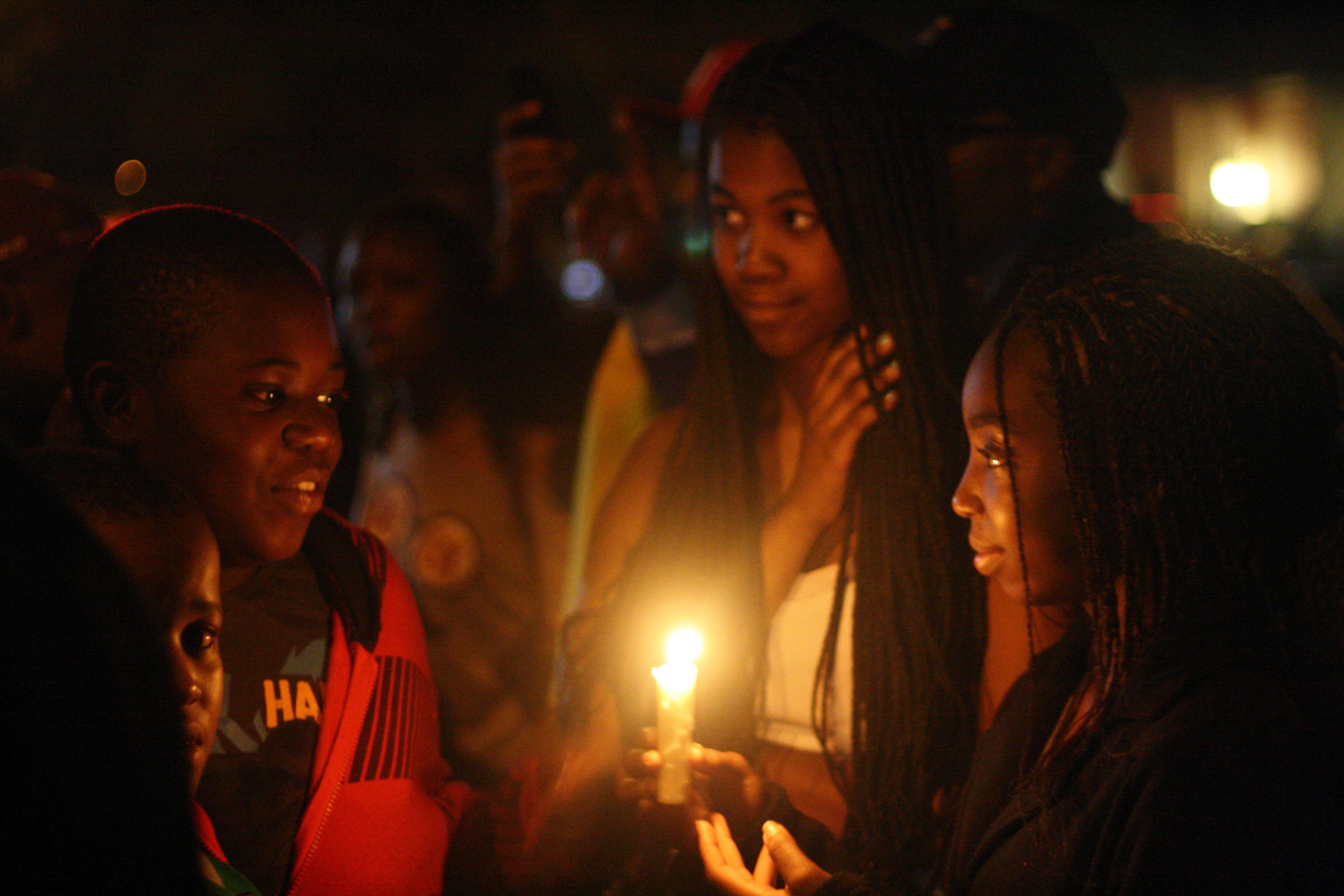
I could not even distinguish what language people were singing in, forget about understanding the words, but the feeling was hot, the emotion was raw.
The national anthem, a hybrid of Nkosi Sikelel' iAfrika (God Bless Africa) and Die Stem van Suid-Afrika (The Call of South Africa) was one in which almost everyone joined in, and therefore the loudest, but what reverberated was the chant: "Tata! Mandela! Madiba!"
Even tourists who were there just to get a selfie outside Mandela House joined in.
As crowds grew, riot police parked their outlandish vehicles, established perimeters and a pair of law-enforcement helicopters hovered above, the staccato whir of their blades registering an intimidating presence.
But none of them was called upon to do a job.
This was a peaceful, joyous, gentle, tender mob if such a thing is possible.
Hundreds of candles lit grew into the thousands, wreaths of fresh flowers were placed in the dark of the night when one man slept a final time and a nation awoke.
"Tata! Madiba! Mandela!"
The chant was still ringing out in the air when my companions and I had to leave because there was a flight to Durban waiting where our next assignment awaited us.
Us cricket reporters spend their careers, entire lives, writing about grown men who hit a ball and watch others chase it. There is no disgrace in this.
And yet, in the process of doing so, you might allow yourself a moment, an evening, a sleepless night, when something so much bigger happens.
You don't know how to react, you are not trained to write about such things, and yet, all it takes sometimes is an open mind and heart.
When Mandela's comrade in arms Tutu died, a cricket reporter was relieved of all his duties for the day.
Forget about the government declaring a week of mourning.
The skies opened and cancelled all cricket.
As Indians we believe in omens, usually, the bad ones that might hurt us, our bank balances or interfere with our petty lives.
But, just occasionally, even an ordinary cricket reporter can see that the universe has conspired to make him pause, look beyond runs and wickets, speak to people, read a bit, learn what the high-school history textbooks never taught him and stay with Desmond Tutu a moment