Cricketers first, Indians and Pakistanis next
The undercurrents of love and hate collide when the two teams play, but fans and players have a different take.
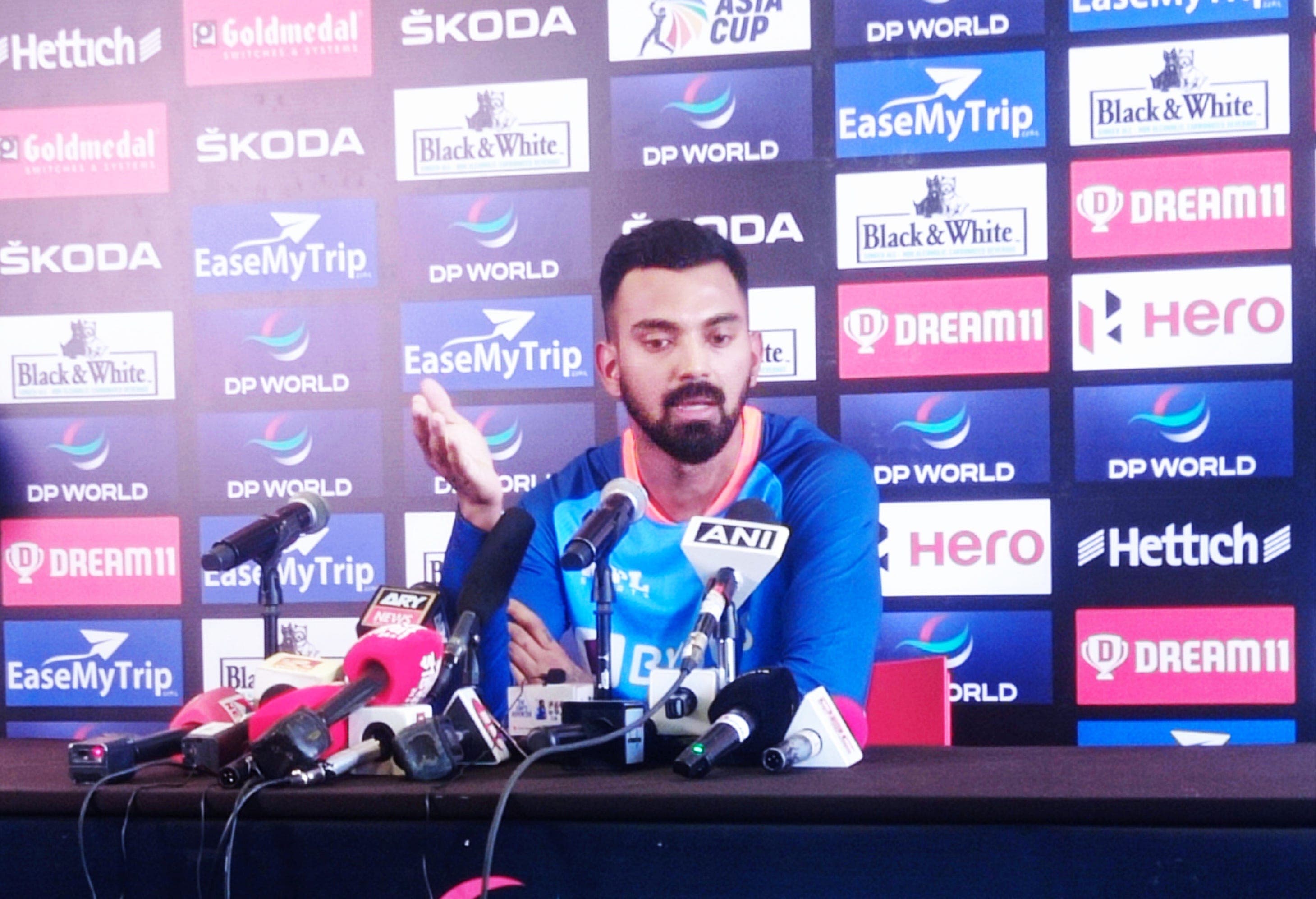
KL Rahul admits you can’t “run away from the rivalry and emotion” of an India-Pakistan match. © Anand Vasu, all rights reserved.
Just recently a series of photos went viral on social media. It was a set of images of international borders from different parts o the world. One was a library with an invisible line separating Canada and the United States of America. Another was at a cafe where some tables were in the Netherlands while others were in Belgium across an aisle.
Amidst these quirky photos was the border between India and Pakistan, visible from satellites in the night sky and in the daytime much more intimidating, razor wire separating lands that were one until as recently as 1947.
The animosity between the two countries has grown strong over the years, given oxygen by politicians on both sides of the border who have fanned the flames for a different kind of benefit and self-interest. This has proliferated into every walk of life. Musicians from one country are not allowed to work in the other, bilateral sporting ties have ceased to exist and there is little or no significant trade across the border.
In India, cricket and Bollywood are everyday metaphors for bigger things. While Bollywood tells make-believe stories, sport is very real; therefore, India-Pakistan cricket has long been portrayed as war minus the shooting.
While this makes for a narrative that fits, the reality on the ground can sometimes be very different. In the neutral territory of the United Arab Emirates, where the Asia Cup is being played, India and Pakistan are in the same group and will play each other once, to begin with, and unless Hong Kong upsets either of these cricketing giants, they will meet again in the second round. There is the delicious possibility of the two teams meeting again in the final of the tournament.
The running joke is that the Asia Cup is actually a way for India and Pakistan to play a three-match series, while the other teams fight it out in the rest of the competition. This is a touch disrespectful to Sri Lanka, Bangladesh and Afghanistan, who are not there just to make up the numbers, but it is clear what events are the cynosure of all eyes.
Naturally, this means there is serious hype generated around the India-Pakistan encounters. All those in the cricket ecosystem who benefit from eyeballs and interest and rupees play this up as much as possible, while the cricketers fight to do the opposite. If the players are sucked into these games, it will become impossible to perform and therefore they try to ensure that this is treated as just another game. They are, however, human, and it is impossible to disconnect from reality in such a clinical manner, something KL Rahul admitted.
“We can’t run away from the rivalry and emotion that comes through as a player. As youngsters, we’ve always looked forward to being in such clashes. When you get an opportunity to be in a clash like India-Pakistan, it becomes a game of bat and ball,” the Indian vice-captain said. “You see the opposition as opposition and try to be at your best, focus on yourself more than the opposition. You’re not going to worry about outside talk, vibe and emotions. Yes, you tend to give 10% more effort but we still remain players, we all love this game, all of us have had similar struggles. After the game or before, everything goes away you become normal people, learn from each other, share experiences, It’s always been friendly.”
Even before the game, players from both teams have done what they can to just be normal and human, not pawns in an international rivalry. Rahul, who played for India in the Under 19 World Cup in New Zealand in 2010, came up against Babar Azam then. He has since keenly followed his counterpart’s progress.
More recently, ahead of a training session at the International Cricket Council’s academy, Rahul spent some time chatting with Shaheen Shah Afridi. The left-arm pacer who wrecked India at the last Twenty20 World Cup is out of this series with an injury, and Rahul knows how frustrating that can be, having himself been laid low for two months. Rahul revealed that in their conversation he “shared a bit of concern” and spoke from “his own experience of injury and missing matches.”
After another training session, India’s players were walking towards the team bus, lugging their kitbags when a young fan, dressing in Pakistan cricket colours, desperately tried to get their attention for a selfie. Security guards stepped in quickly and ensured the fan could not get anywhere near the players. Watching this, Virat Kohli put down his kit and came over to the fan, convinced the security guards to relent for a moment and posed for photographs. The fan, who had travelled from Lahore to Dubai with the sole aim of sharing a moment with Kohli, his favourite player, was over the moon.
Not much later, India’s players were put through their paces in fitness drills at the ICC Academy Ground in scorching heat. When they finished up, Rohit Sharma saw a group of Pakistani fans pressed up against a fence that separated the players from the rest of the world. He walked over, exchanged high fives and mock hugs, separated by a safe social distance, almost like you see people do across plexiglass in prison visits in Hollywood movies.
There is much hype around India-Pakistan matches, this goes without saying. But, not all of it is manufactured. On social media, fans of the two countries genuinely go to virtual war during these games, trolling each other and being genuinely nasty from the safety of anonymity. But, these same fans have genuine respect and appreciation for the players, from either country, when they see them in the flesh. Suddenly Indians are not the other for Pakistanis, and vice versa.
For the players, the very real need not to lose in these fixtures — effigies will be burnt, houses tarred — does not overshadow a common journey. They all know just how difficult it is to make it to the top in international sport, the challenges along the way and the pressures that come with it. This shared knowledge and experience ensures that there is genuine empathy, even friendship and bonding. In a sense, in that moment, having walked in each other's shoes, they are cricketers first and Indians and Pakistanis next.
© Anand Vasu, all rights reserved.