Ashwin reaches latest stop
Life turns in unending circles says India's philosophical spinner
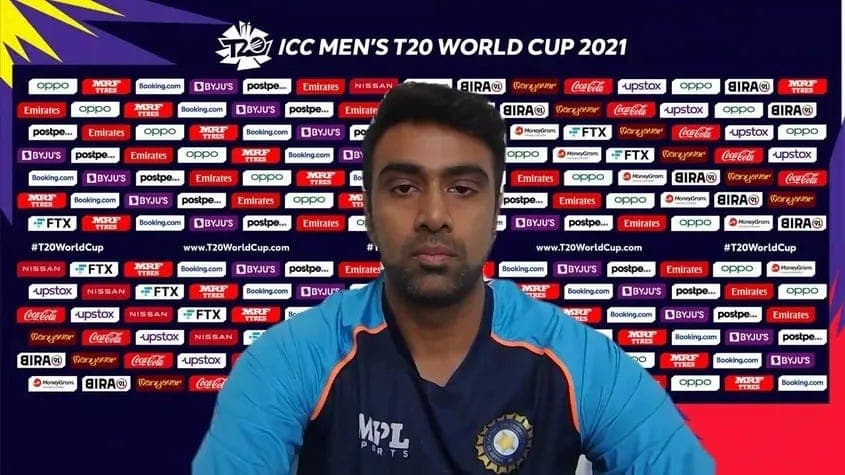
Image courtesy International Cricket Council
The great BS Chandrasekhar had just about lost it during a tour of New Zealand when he believed he was getting a raw deal from biased umpiring. Many close calls had gone against a bowler who keeps it straight and sharp, always attacking the stumps.
Finally, one ball got through and knocked over the stumps.
Chandra turned to the umpire and asked: “Yes I know he is bowled, but is he out?”
For a minute R Ashwin may have thought he was in a similar situation.
Yes, I have been picked once again in India’s white-ball set up, but will I play? And then, for a few anxious overs in India’s match against Afghanistan in Abu Dhabi, some people watching the chase were wondering: Yes, Ashwin is playing, but will he bowl?
He did, and magnificently at that.
While he bowls largely conventional off-spin, there is tremendous mystery to his art.
Ashwin varies his run up, his point of delivery, flight, turn, spin, dip, literally every strand available to a bowler, to create pressure, confusion in the minds of batsmen and eventually wickets.
Ashwin ended up with 2 for 14 from his four overs, almost had a third wicket and could have ended up with even more.
Rohit Sharma, who was Man of the Match after his robust innings at the top of the order, was all praise for Ashwin.
“You saw his quality today. He's a quality bowler, without a doubt.He also knows that it was a challenge for him because he was playing after three or four years,” said Rohit, who is in line to take over as India’s next Twenty20 International captain and potentially white-ball captain. “
Ashwin is someone who's a wicket-taking option. Any time you give him the ball, he comes to take wickets. He's not there to survive or just to bowl his six balls and get away. When you have someone like him in the playing XI, it gives that advantage that you have someone in the middle who can take wickets.”
Speaking a day after the event, Ashwin was less technique and more philosophy.
To start with, he was just happy to be back in the mix.
“The news that I got selected for the World Cup was very heartening. I had fun after hearing the news in terms of enjoying myself and gratification of what I wanted to achieve in life. So that was one side of it,” said Ashwin. “I had some special dreams getting into the World Cup, wanting to do special things for the team. After a point in time, more than trying to prove anybody else right or wrong, it’s more about trying to prove it to yourself and also have something to achieve for the team.”
Ashwin believed that his time out of the white-ball scheme of things was also a part of life.
“Look, fortunately, I believe life is a circle. For some people it’s a small one. For some people it’s a large one, which is definitely not in our hands. For me, understanding the battles in my life and career is something I have done very well over the last couple of years,” explained Ashwin. “Whenever I’ve had a good stretch or whenever it’s been the other way, I’ve had some deep ridges to go through, some long periods of lull. I don't want to read too much into it as to why those lulls have happened, but definitely that's a pattern I have embraced in my life.”
What did he have to do then, to take this in his stride?
“Staying humble through good periods and success is a statement a lot of people make and a lot of people in my fraternity make, but I've firmly embraced it, and I've lived it. I believe success, like on one side you get success in cricket 30 percent of the time in your career and fortune is also important at some stage of this career,” he said, before asking rhetorically, “Who am I? I'm no different. So I embrace it. For me, it's not about what the game has given me, it's about what I've given the game and how much I enjoy playing the game. You put three stumps anywhere and ask me to play a game at this stage of my life, I would do it with most happiness.”
Ashwin took a moment to introspect on how things have moved on with Twenty20 cricket.
“I feel the understanding of the game is still backward in so many ways. For me, when you call upon a bowler and say he's got to pick wickets, they're talking about lengths. For fast bowlers there are different player plans. For spinners, there are different plans. And there are certain lengths that a bowler cannot afford to bowl like he bowls in a Test match, especially for a spinner,” he said. “ Most often than not, wicket-taking is something that's seen as something that just happens, but it's not like that. A lot of experts and wise men who have played the game say that cricket is a game of partnerships. For every wicket that a bowler is picking, there's an over that's been bowled before or after that's created that wicket. So we need to understand that.”
Ashwin also sort of conceded that he may be expecting a bit too much.
“I think I expect too much from people watching the game, but this is exactly how I play the game. I cannot shirk my responsibility of bowling dot balls or bowling economically, but in the process, if I'm getting wickets, I'm getting wickets. I also need to keep in mind the interest of the team and what the team expects from me at that particular ball,” he said, before getting to the core of his approach to bowling in T20 cricket, or his philosophy, if you will.
“There are 24 events I get in a game, and these are cliche terms used by people inside the team and outside the team as well, but I take it very seriously. 24 events, and I need to win every event. And what is a victory? That victory is directly in relation to what my team needs. It’s not what I need,” said Ashwin. “It's easy for me to throw the ball up looking for a wicket, but remember every T20 game is won by a margin of two runs or won by a margin of one ball or two balls. So I need to keep that in mind every single ball that I bowl.”
Ashwin is reasonably clear that life has not yet come full circle for him as a cricketer.
“Circles are never completed. They keep going in loops. I can’t really say the circle has come around and all that. The perception of finger spin needs to change, I think,” said Ashwin. “Ever since 2017 I was going through a very good phase of my Test career, and I felt like I was bowling amazing stock balls at that point in time. I didn't require anything else to be doing at that stage. But like I said, the circles stop.”
“There are stations at every single place, and that Champions Trophy final was one of those stations where I had to halt and think about my career,” explained Ashwin. “Ever since, I've evolved as a T20 bowler. I've bowled a lot more deliveries that there are people that are terming them as carom balls and off-spin and arm balls. But those are very subtle. I'm trying to create different angles to create different seam positions.”
When, finally, Ashwin was asked about the role of family travelling with cricketers in the time of bio-bubbles, he was perhaps most relaxed and eloquent.
“Some of my friends and acquaintances, they still don't get the life in a bubble. They actually think bubble means we are living in a hotel and playing the games. They want to meet. But we don't get to see other people at all. In fact, we live amongst ourselves,” said Ashwin.” We live within rooms just trying to create some environment that we are communicating with each other and trying to play a few team building games here and there, and that is all we've been doing for the last eight months or ten months.”
Ashwin suggested that doing this with just team-mates might be a stretch.
“Without my family, I would struggle so much. I continue to owe a lot to them. Many times when the team loses, they put pictures of family going out and all that, people go after us saying, what are you doing? You're on holiday with your family and all that. We're hardly on a holiday,” said Ashwin. “The time we come back to the room, we've had a good day or bad day, family is the only place we can lean upon. They've played more than a small role in what's happened in the last eight months. We've had some great results. We've had not so great results, but that’s what happens on the field. Off the field, we are also human beings, and we also have a family. We need to have that sort of space and cushion to go out there and play the next day.”