And Then There Were Two
Mayank Agarwal and KL Rahul get India off to the perfect start
The first overseas cricket tour I went on was the International Cricket Council Under-19 World Cup in Sri Lanka in 1999-2000. Having never toured before it did not strike me as particularly unusual that there were only two reporters from India covering the event.
The Under-19 World Cup back then was not as big is as it today, a direct pathway, or short cut, if you will for players to get noticed and slide into the Indian team.
Certainly that tournament threw up stars, Yuvraj Singh the biggest among them, but also Mohammad Kaif and to a lesser extent Reetinder Singh Sodhi, who all went on to play for India.
The next time I went to an Under-19 World Cup was in 2010, and again there were only two reporters from India on the tour.
This was more understandable because the tournament was in New Zealand, and the expense alone meant that many media organisations did not think it worth their while in sending a reporter to the tournament.
The beauty of watching Under-19 cricket is that there is a laid-back, more casual feel to things. You have access to the players, who are all keen to tell their stories and get their name out there. It is the opposite in international cricket, where the players are guarded to the point that they now consider journalists a nuisance, choosing instead to connect directly with their fans via social media.
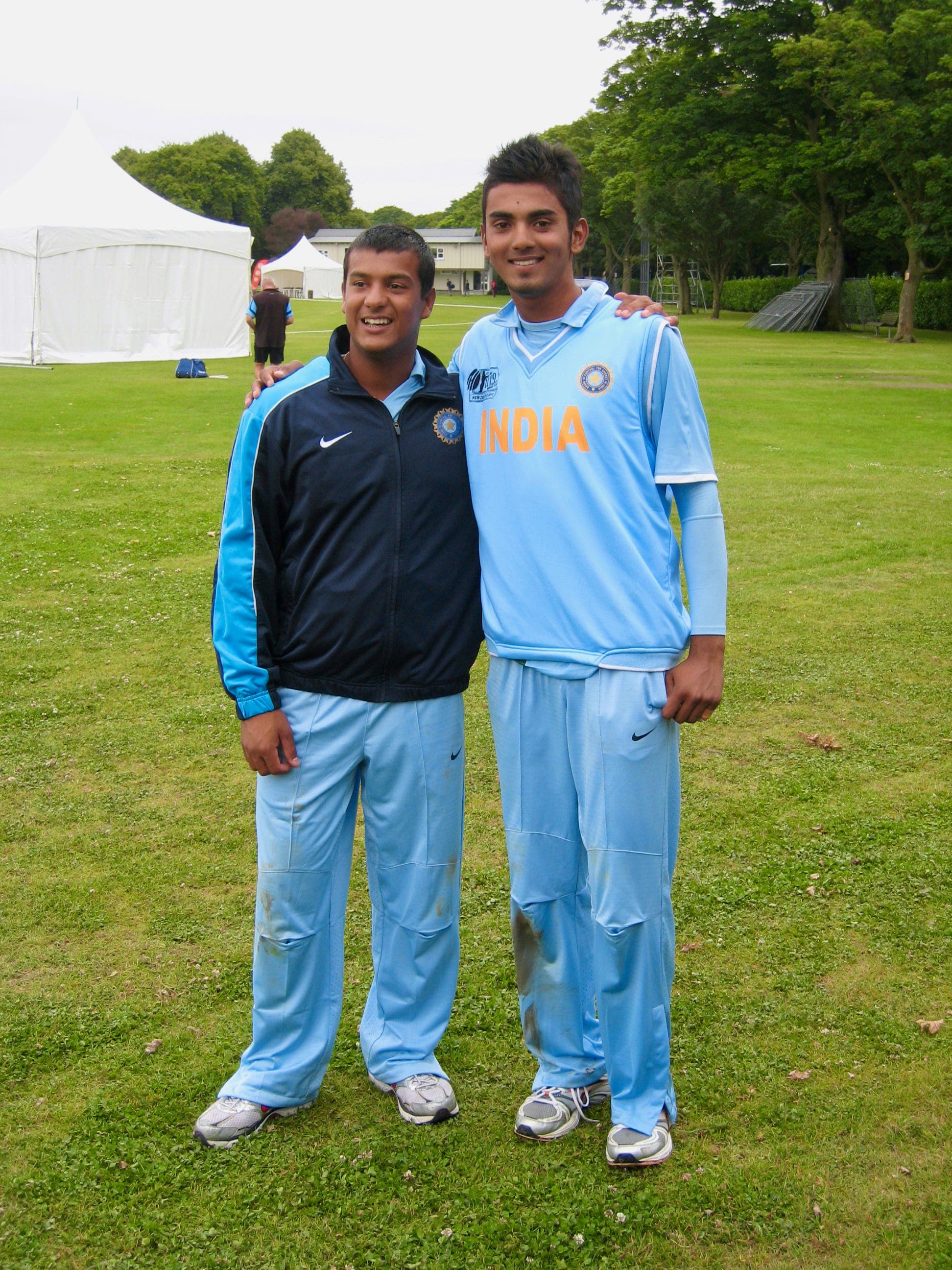
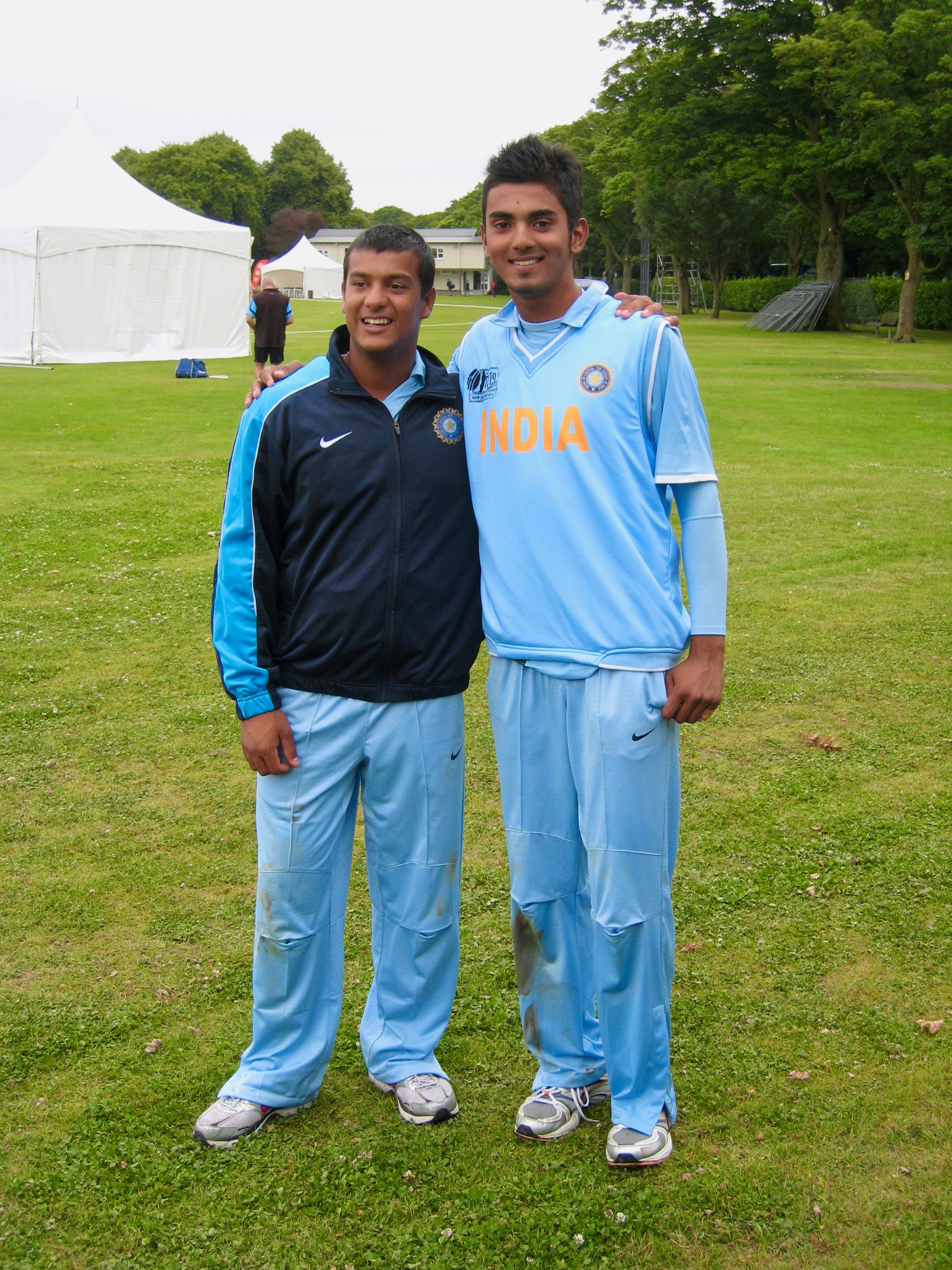
In this tournament, India did not go all the way, but I distinctly remember one rainy day in Christchurch, at the Hagley Oval, where a young pair from Karnataka, Mayank Agarwal and KL Rahul opened the batting.
Interviewing them at the end of the game was a pleasure because they were both clearly good friends and enjoyed each others’ success. A photograph I took of the pair back then has since gone viral and keeps doing rounds of the Internet whenever one or both do well.
My memory of the pair then is of Mayank being the more assertive, confident one. He even looked closer to being the finished product than Rahul. But, reed thin and tall, Rahul was the more beautiful batsman, and what he lacked in Mayank’s power he more than made up with silken timing, especially when he played through the off side, either on the ground or over the top.
Neither of the two made a big splash immediately after the World Cup, but, it was obvious that both had considerable talent.
My next long conversation with Rahul happened in the West Indies in 2016, where he had just scored a hundred. In this, he told me the story of how, as a youngster, he wanted to grow his hair out like Mahendra Singh Dhoni, but his coaches would have none of it. “Like Dhoni, you also play Test cricket, then after that, do what you want,” one told. Rahul spoke of how he saw his body as a canvas and his tattoos as telling his story.
This was a very different person from the teenager I had met, and it’s always rewarding to see a gifted sportsperson also growing off the field.
Cut to 2021 and Centurion.
India have come to South Africa believing this was their best chance to win a series here. In three decades of trying, teams with big names and established stars have failed to do so. There have been occasions of real promise, but India just could not get across the line.
The point of having the opportunity of a lifetime, though is to grab it within the lifetime of that opportunity.
Virat Kohli won the toss, which was a promising beginning and even under cloudy skies, on a SuperSport Park pitch tinged with green, he chose to bat first.
The Indian middle-order has been such a mess over the last two years, Kohli, Cheteshwar Pujara and Ajinkya Rahane have all struggled for runs. Couple this with the fact that the captain believes he must play five specialist bowlers in every Test match and it puts an extraordinary responsibility on the opening batsmen.
Different people react differently in being put under the pump, and Rahul’s response has been that of a classical long-form batsman. Nowadays, when it comes to Test cricket, he just puts his head down and bats and bats and bats.
On the day, what stood out about Rahul was the time he gave himself. When the ball is doing a bit, coaches will tell you to see it early and play it late. Rahul did just that, when he was playing, for the best part he was driving the bowlers up the wall by leaving the ball alone. Rahul knew exactly where his off stump was, and anything that did not threaten the three sticks was left well alone initially.
It is one thing having time to play the ball, and quite another to give yourself time to do nothing, to not react to the bowling unit’s attempts to build pressure. Frustrate them long enough as a batsman and the pressure automatically shifts onto them to make something happen. Inevitably this results in trying too hard or stepping away from the basics and the gameplan, and gives the batsman looks balls to score off.
When Rahul brought up his 7th Test century, he added to an impressive collection, having scored at least one hundred in each of the countries where he has played. England (twice), Australia, West Indies, Sri Lanka, and, of course at home in India.
What was even more soothing and refreshing was that he did not give his wicket away after getting to the milestone, pushing on 122 not out, ensuring India ended their day on 272 for 3.
It was as play was wrapping up I was reminded that this was now the third time in my 23 years as a cricket writer that I was one of only two Indian journalists in the press box, thanks to the Covid-19 pandemic and the fear of travelling to South Africa in the wake of the emergence of the Omicron variant.
You would think this is a good thing, having so few competitors out there, but it is a double edged sword.
Covering a cricket tour is an immersive experience. While matches are on and you’re sitting in the press box you get sucked into the action in front of you, to the exclusion of all else. This can easily distort your perspective.
Through the day thoughts swirl in your head about what you will write and how you will write it, and a lot of the work is done here, before the first keyboard strokes are induced.
In that period thinking and forming ideas, it helps so much to have colleagues around. Although we may write very differently, have very different demands when it comes output, we usually spend all day talking about the game, and this definitely shapes the narrative for me.
I’ve tried to have these conversations in my head, in the absence of company that is usually around, but it’s just not the same.
I guess nothing about the world is, anymore.