A Thirst Will Be Quenched When India Play Pakistan
History is what it is, but the toss and how they play will rule the day
Melbourne is a special place to watch cricket.
You could be two kilometres away from the Melbourne Cricket Ground, of The G, as it’s affectionately referred to and be blissfully unaware of what the weather is like at the 100,000-seater stadium.
Walk out in a rain jacket amidst the mizzle and arrive at a ground bathed in bright, sharp sunshine 15 minutes later. The reverse is obviously less pleasant.
When the game in question is India v Pakistan, in a Twenty20 World Cup, the stakes are as high as they can be. An Ashes Test, theoretically at least, lasts five days. This game could be here and gone before you know it.
And yet. the build-up has been not slow burn but from the frying pan into the fire.
When India had their net session a day before their game, a group of young Pakistanis belted out “Jeetega bhai jeetega, Pakistan jeetega,” suggesting that their team had the game won. In a second a wall of noise drowned them out, with India’s fans replying in full-throated and voluminous kind.
Vikram Rathour, the batting coach of the Indian team, went over to a group of fans and asked them if they could please pipe down for a time. Virat Kohli was in the nets and he clearly did not enjoy the noise coming at him from 10 yards away. Amazingly, the fans bit their tongues, at least while the ball was being bowled and addressed by the master batsman.
In an adjacent net, KL Rahul was tonking the ball to all parts, especially peppering the leg-side nets. Rahul is a gently beast of timing through and over the off side, or straight down the ground, but clearly he was preparing for bowlers attacking his pads or ribs.
Rohit Sharma, having just addressed a press conference, was in long conversation with Rishabh Pant. Neither looked like they would get into the nets (although both did at a later time) and a white Kookaburra ball was tapped up and down with a bat like it was a plaything.
Several key players were not at the nets on the day before India’s first match. Mohammed Shami, Arshdeep Singh, Dinesh Karthik and others, who had put in the hard yards in an optional practice session the day before, did not even show up.
Well rested and properly prepared is the key to some matchups, not how much time you spend in the nets the day before a game.
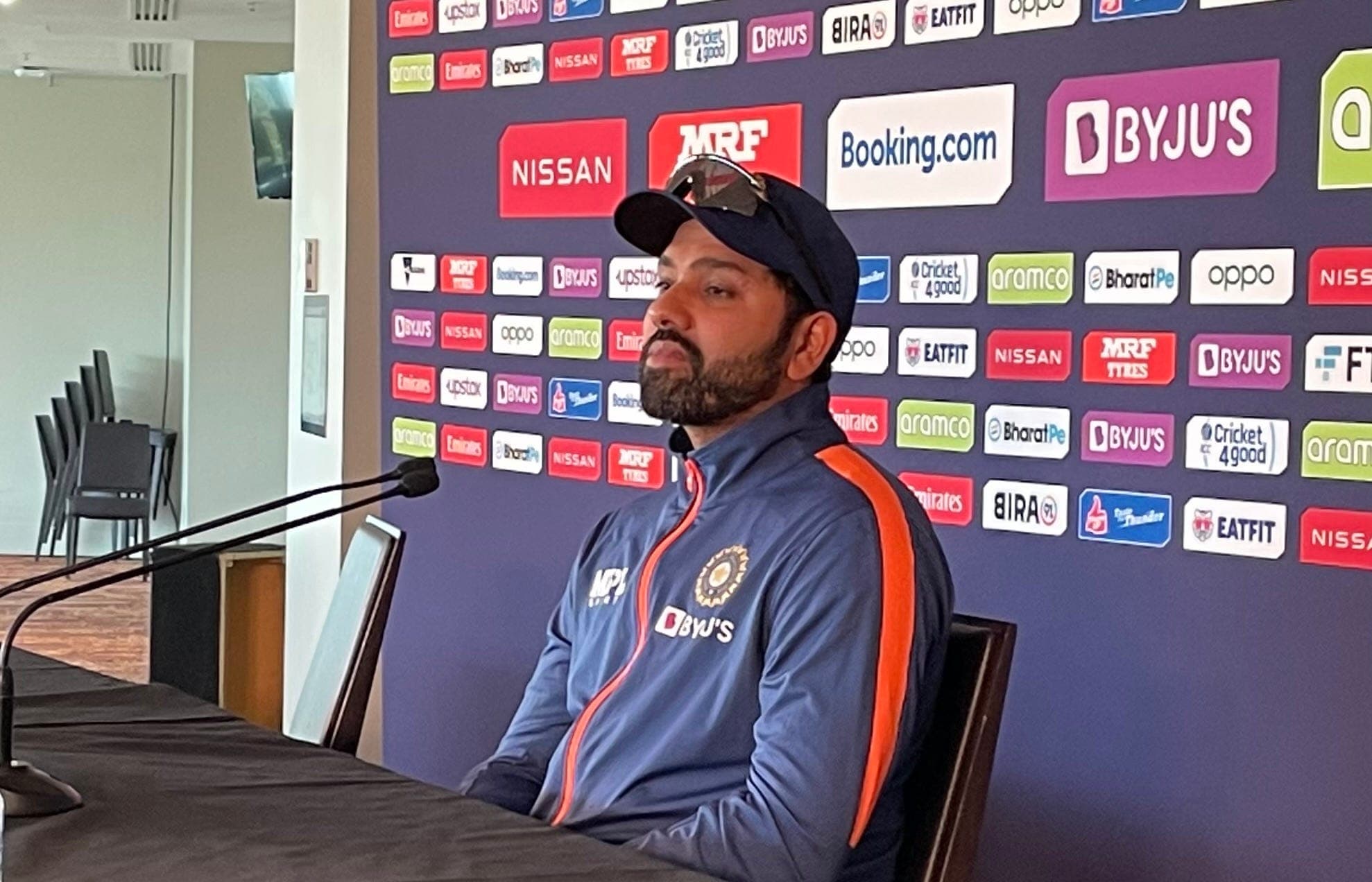
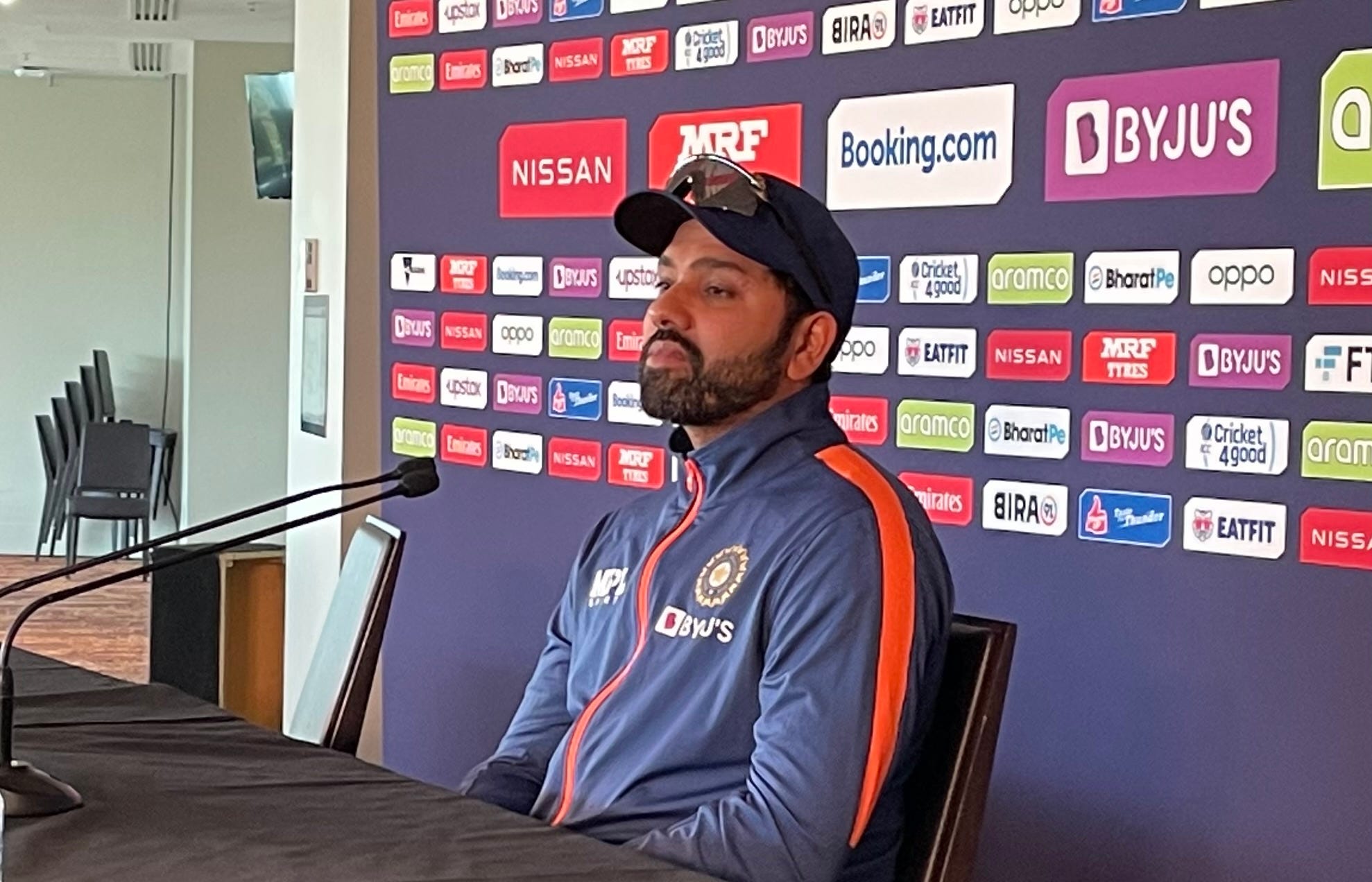
When Rohit addressed the media, he began by jocularly saying he was nervous, as he fixed the broadcaster’s mic on his collar. For the next 25 minutes, he patiently answered questions.
“Since the last T20 World Cup (a year ago) India has played 29 people in 35 T20Is. Have you found answers?”
“Are you happy with the inclusion of Mohammed Shami? In the warmup game you called him to bowl in the 20th over and in the first 19 overs he was not used. Was it a plan or just came out of the box, that you can use Shami?”
“If you look at India's schedule in this World Cup, in some of the matches you are playing the second game on the day. Playing on a used pitch, do you see a role of spinners in this World Cup?”
Rohit is a patient guy. Just as he has time to play his shots, he can take a deep breath before answering questions put to him in a presser. At one point Rohit referred to the “security” a team environment had to give a player before they demanded he play with “freedom,” not worrying about numbers but sticking to the team plan and playing a role.
Indian win a lot more than they lose. Take their record against Pakistan. In 11 T20Is the two teams have played, India has won seven times, lost thrice and had one match tied.
But, recent memories are not so good.
It was Pakistan who knocked India out of the last World Cup, Shaheen Shah Afridi blasting Rohit and Rahul in the first over, in the United Arab Emirates a year ago. In the Asia Cup, at the same venue, most recently, Pakistan lost one but beat India when it mattered, dumping them out of the tournament.
When these two teams play, records (even if they favour India) go out the window.
It’s all about what happens on the day. Past wounds won’t heal and old scars are for life, but every India-Pakistan match in a World Cup is a chance to add a footnote to history.
All that’s left is the toss of the coin, and an umpire to call: ‘Play.’
Everything else is just outside noise.